Hungary: Dhulka Baradhada ayaa hoos u dhacaya ilaa 5,065 hektar, oo ah Toban meelood meel ka mid ah heerarka 1990-meeyadii
Wadooyinka muhiimka ah ee la qaado
- 5,065 ha of potatoes are planted in Hungary this season
- 7,800 ha and 221,000 t were the 2025 area and potato crop
- 63,000 ha was the peak potato area, reached back in 1997
- 87,000–100,000 t is the 2026 crop estimate by Agrárágazat
Maxay muhiim u tahay?
- Beeralayda
- Invest in irrigation before expanding potato area. Use the thin domestic supply to negotiate forward prices with packers and retailers.
- Ganacsatada
- Plan larger winter and spring imports. Egypt, Israel and Poland are the main alternative origins for the Hungarian market.
- Alaab-qeybiyeyaasha
- Target the remaining growers with irrigation and frost protection offers, since weather losses drive exits from the crop.
- Maalgashadayaasha
- Watch the margin cap decision. Its removal could improve returns across the Hungarian potato chain.
Soo koobid 60-ilbiriqsi ah
Hungarian potato growing has shrunk to a sliver of its former size. About five thousand hectares are planted this year, roughly one tenth of the area of the 1990s and well below the 7,800 hectares of 2025. After frost in May and summer drought, one farm outlet puts the coming crop at under one hundred thousand tonnes, against more than eight hundred thousand tonnes at the turn of the century. Imports from Egypt, Israel and Poland now carry much of the winter and spring market. The national potato board has joined other farm groups in calling for an end to the state cap on retail margins, arguing that prices must reflect real costs. For the remaining growers, irrigation and fair pricing will decide whether the decline continues. Caution: the crop estimate is the outlet's own calculation, and reports disagree on how much area fell from last year.
Potato growing in Hungary has hit a historic low. The planted area in 2026 is about 5,064 to 5,065 hectares. Farm outlet Agrárágazat reported the figure on 14 September 2026. Business daily Világgazdaság gave the same area of about 5,065 hectares earlier in September.
In 2025, Hungary grew potatoes on 7,800 hectares, according to Agrárágazat. The crop reached 221,000 tonnes. In the 1990s the area was 50,000 to 60,000 hectares. It peaked at 63,000 hectares in 1997. In 2000, Hungary produced 863,500 tonnes, based on data from the statistics office KSH.
Harvest may fall below 100,000 tonnes
Agrárágazat estimates the 2026 crop at 87,000 to 100,000 tonnes. The outlet multiplied the area by last year’s average yield of 24.6 tonnes per hectare. It then deducted losses of 20% to 30%. May frosts and summer drought caused those losses in early potatoes.
Maalmaha shaqada. Ka bax rukunka hal guji.
Imports fill the gap in winter and spring. Egypt and Israel are important suppliers. Zsolt Polgár heads the potato research institute of MATE university in Keszthely. He said irrigation is key for competitive production in the long term.
Prices have moved sharply. In late August, Hungarian potatoes sold for 160 to 200 forints per kg on wholesale markets. Polish potatoes cost about 220 forints per kg, according to Világgazdaság.
Growers back an end to margin caps
On 22 September, the National Potato Association and Product Board joined eight other farm groups in a joint statement. They support ending the state cap on retail margins. The board said prices must reflect real production costs. There is no room for further artificial market limits, it said. Agrárszektor reported the statement on 24 September.
Maxay muhiim u tahay?
Hungary is turning into a structural importer of potatoes. With a tenth of the old area, domestic growers cover a shrinking share of demand. Frost, drought and weak prices have driven many out of the crop.
The margin cap debate matters for the growers who remain. If retailers can pass on costs, producer prices may better reflect higher input costs. Without irrigation and stable prices, the decline in area is likely to continue.
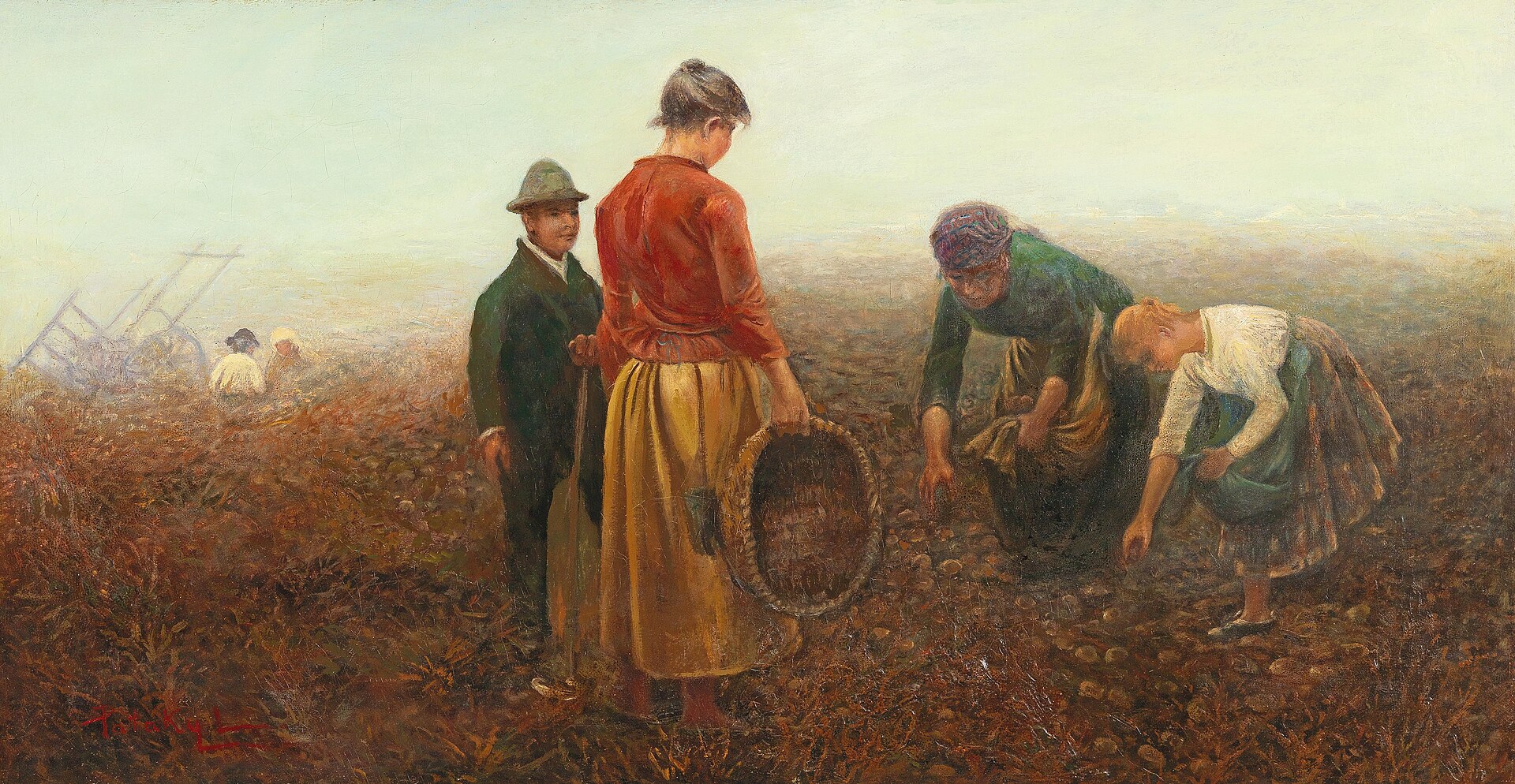
Photo: The Potato Harvest, a painting by the Hungarian artist László Pataky (illustrative). László Pataky / Wikimedia Commons, public domain
Warbixin Kooban oo ku saabsan Baradhada Caalamiga ah
Shanta sheeko ee ugu sarreeya, qiimaha, digniinaha cudurrada iyo dhacdooyinka. Subaxyada maalmaha shaqada, xayeysiis la'aan.
Maxaa xigaya
The government must decide on the retail margin cap, which the potato board wants removed. Final 2026 harvest data are still pending. Imports from Egypt, Israel and Poland will cover winter and spring demand.
Ilaha
- Agrárágazat — Mélypont: tized annyi területről tizedannyi krumplink lesz — https://agraragazat.hu/hir/mezogazdasag-zuhan-a-burgonyatermesztes/
- Agrárszektor — Itt az igazság a magyar burgonyáról — https://www.agrarszektor.hu/agrarpenzek/20260924/itt-az-igazsag-a-magyar-burgonyarol-megszolaltak-a-termelok-64680
- Világgazdaság — Brutálisan megugrott a burgonya ára — https://www.vg.hu/agrar/2026/09/burgonya-brutalisan-megugrott-ara-aszaly
Ku xiran agabkan
Sheekooyin la xidhiidha
Yurub: EU_36 Late Blight Clone wuxuu hoos ugu dhacaa 34% muunado ahaan marka loo eego EU_43 oo iska caabisa 12%
Poland: Qiimaha baradhada suuqa ayaa kor u kacay 27.1% bishii Agoosto ilaa 199.94 zł per Decitoon